
Final design Leeghwaterpark Purmerend – Connecting city park
Proud of the final design of the new Leeghwaterpark in Purmerend: a connecting city park and an asset for residents and nature!
Final design
Commissioned by the Municipality of Purmerend, Buro Mien Ruys has developed the design and vision for the new Leeghwaterpark in Purmerend. This involves a future-proof plan in which a green recreational ribbon provides connection and recognition. Leeghwaterpark is the city park of Purmerend. As a 'green lung', Leeghwaterpark connects the districts of Gors-Noord, Wheermolen-Oost, Purmer-Zuid, and Purmer-Noord. The upgrading of Leeghwaterpark is part of the Municipality of Purmerend's overarching Parks Plan Purmerend 2021-2040.
Parks are increasingly seen as the 'Pearls of the city'. They are used for relaxation, exercise, and social interaction, and serve as an important means of combating heat stress in the city, retaining and storing water, and for ecology.
Green recreation
Buro Mien Ruys proposed a in 2024 vision and design for a connecting city park. A future-proof plan in which a green recreational ribbon provides connection and recognition.
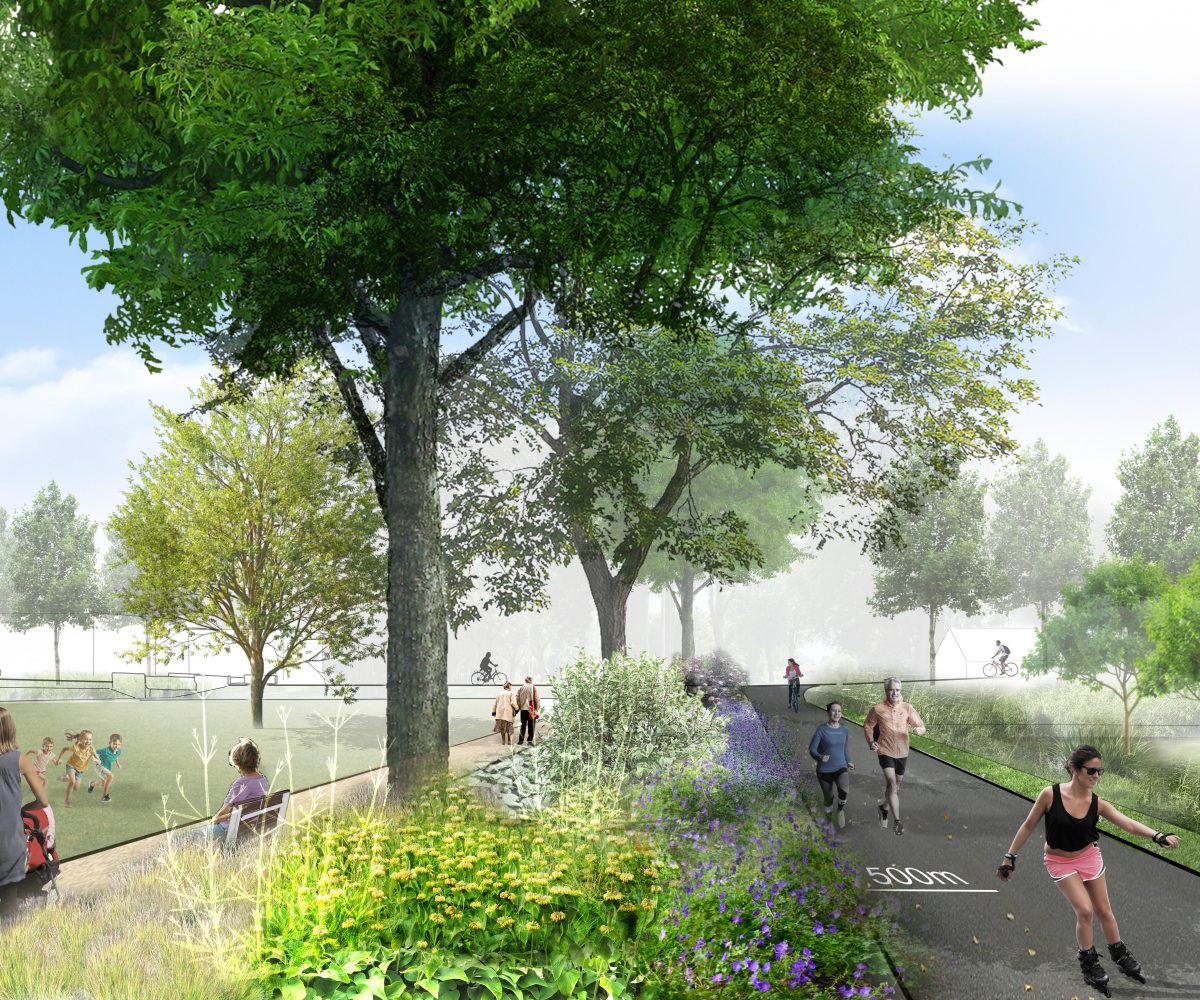
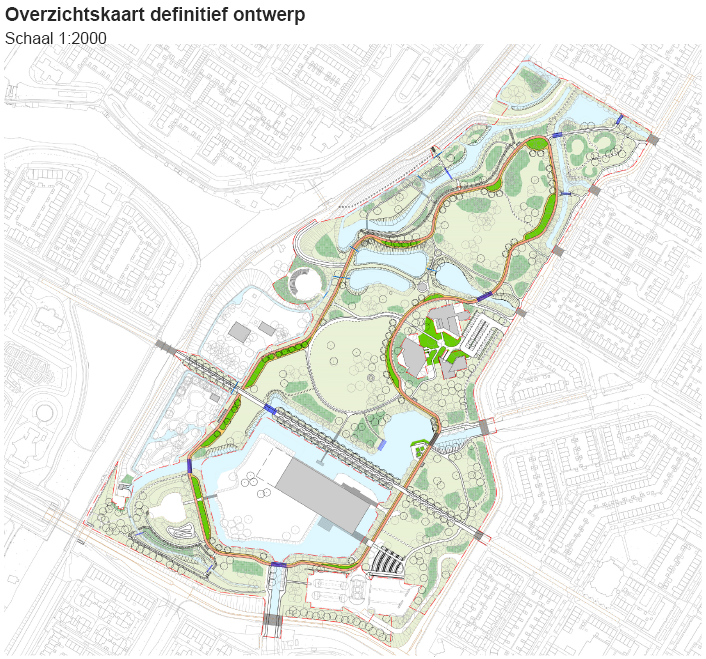
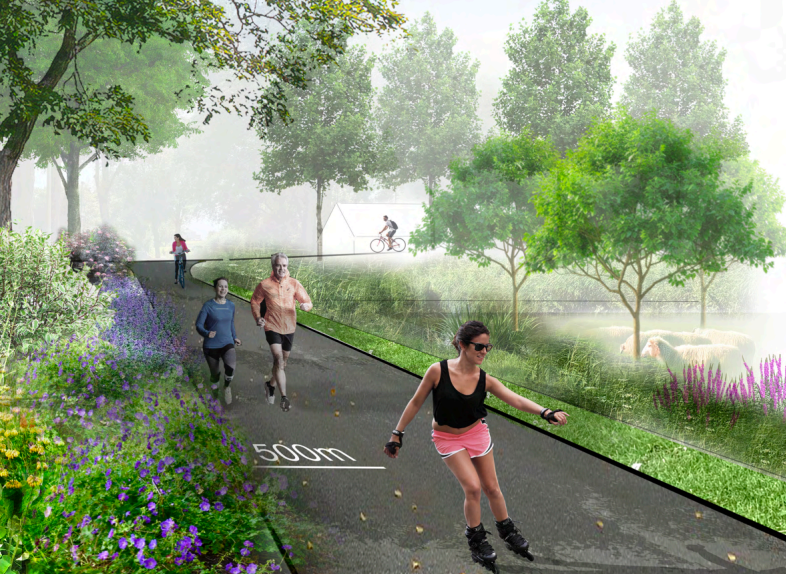
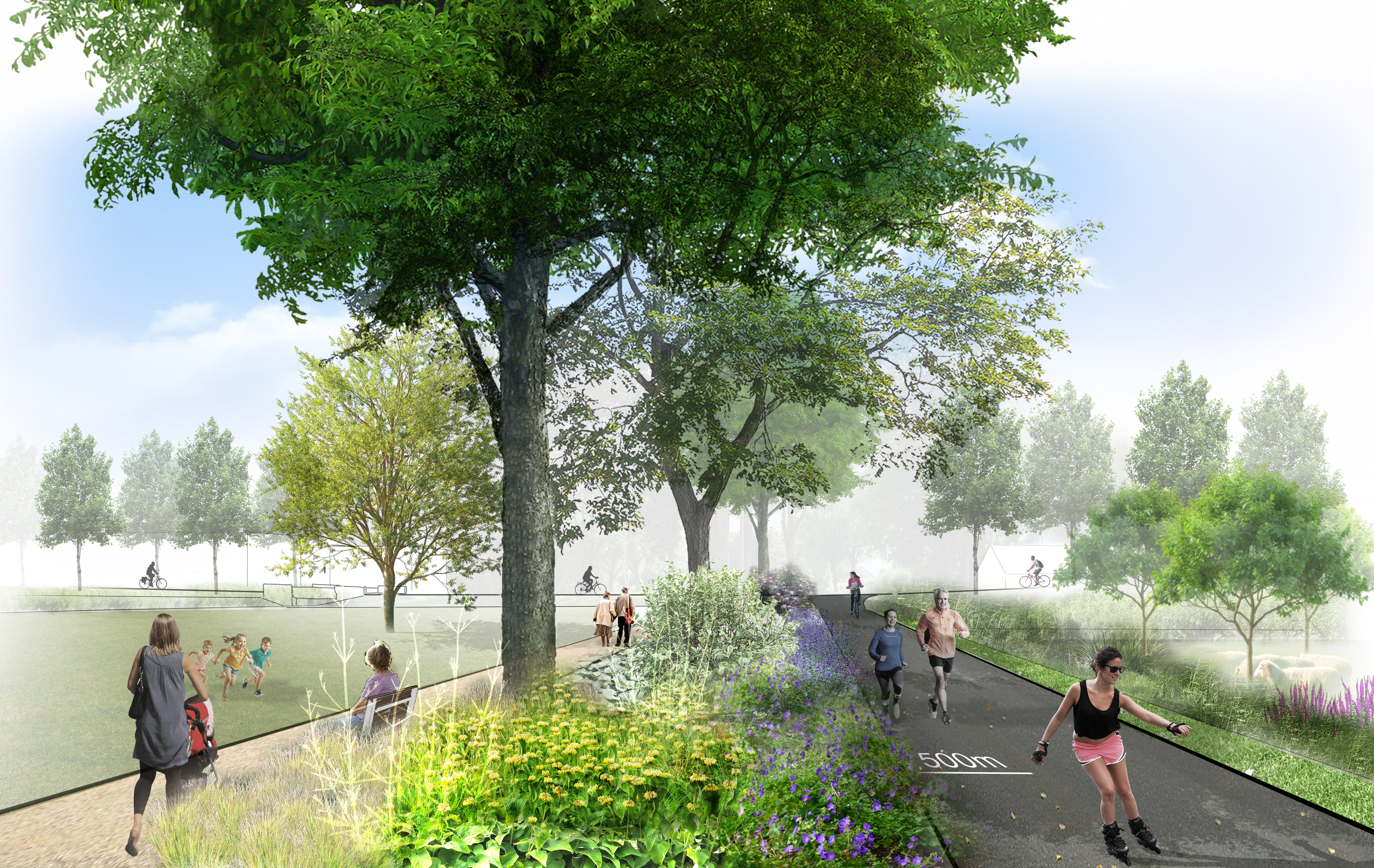
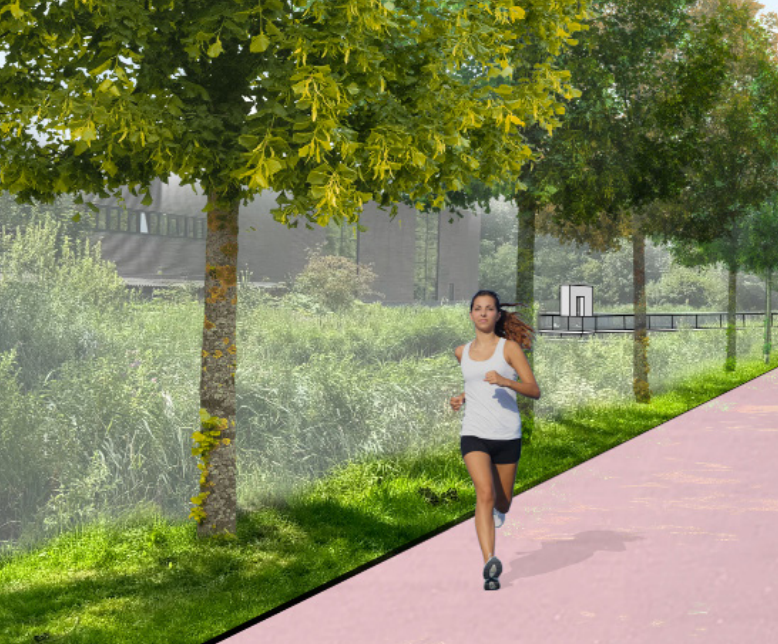
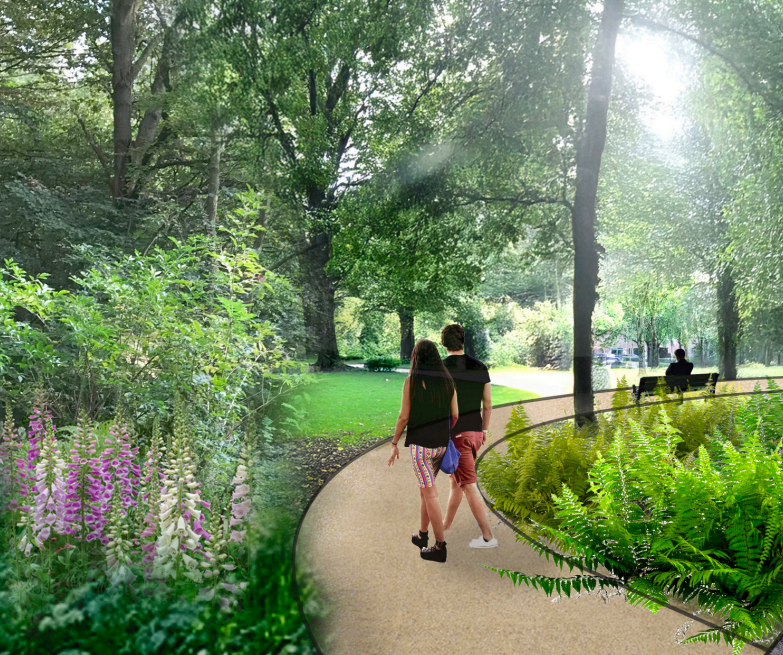
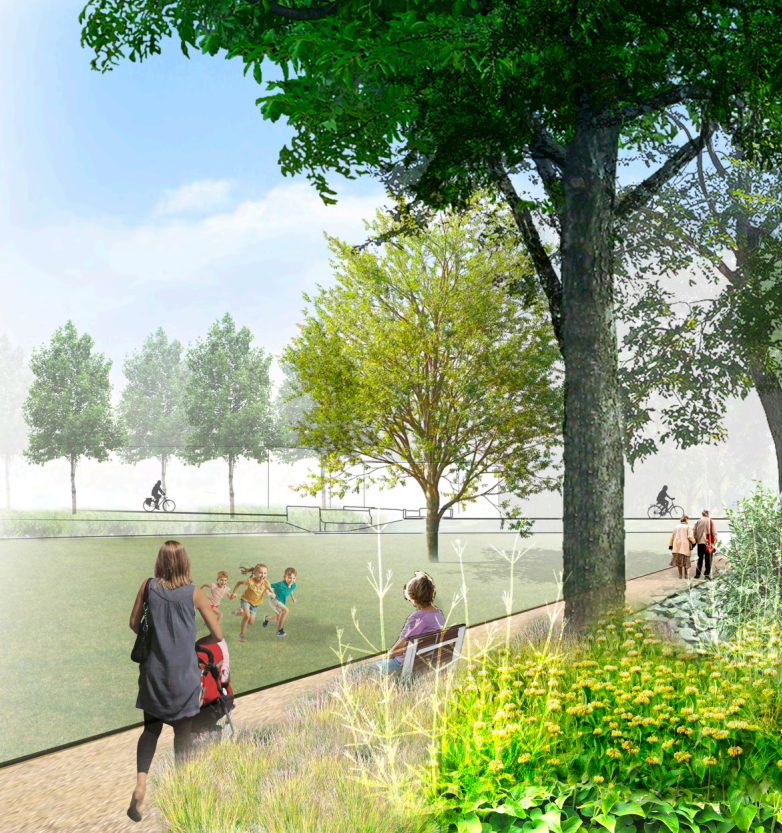
In the new design, the leading role is reserved for a green recreational ribbon that connects all parts of the park. Through this ribbon, existing and new facilities in the park are linked together, like beads on a string. This creates greater cohesion and tranquility between the various buildings, (sports) facilities, and objects present in the park. It gives the park a distinct appearance and identity and strengthens the connection with the surrounding area. Clear boundaries and attractive entrances enhance the park experience. In this way, the park becomes even more appealing to the wide variety of users and visitors. With an area of 24 hectares, Leeghwaterpark is a large park. The new design makes this grandeur visible once again through expansive sightlines throughout the entire park.
Participation and climate
Leeghwater Park not only offers space for relaxation, exercise, and social interaction, but it is also an important tool for combating heat stress and water issues in the city, among other things. Leeghwater Park attracts a wide variety of visitors and users. In addition to local residents, athletes, skaters, and walkers also make grateful use of this multicultural park. Participation played a key role in the design process. Residents of Purmerend were given the opportunity to contribute their ideas, ensuring it truly became a park for and by the people.
Buro Mien Ruys' vision provides a solid foundation for the further development and strengthening of Leeghwaterpark as an attractive and cohesive green area for visitors.
Vision and design
After thorough analysis and discussions with users and stakeholders, Buro Mien Ruys developed a vision for the future of Leeghwaterpark. This vision focuses on strengthening cohesion within the park and improving the user experience. The key elements of the vision are:
- Recreational strip
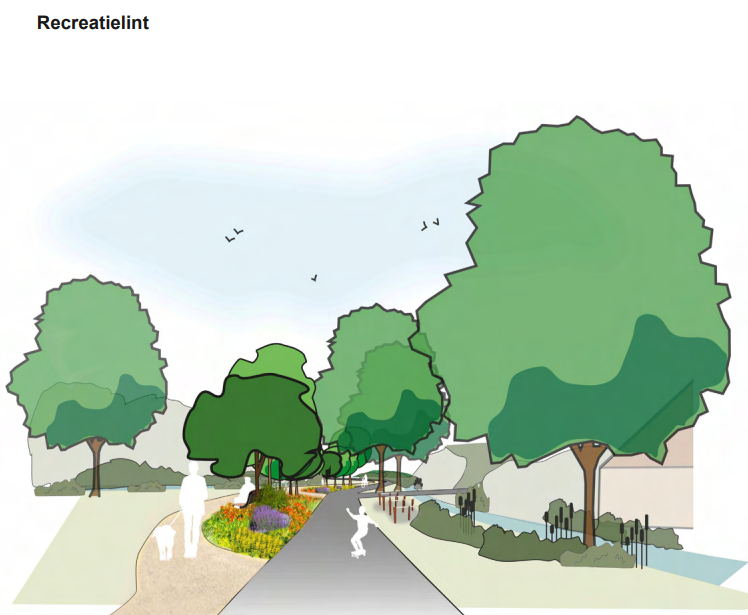
A new connecting recreational ribbon that links the various buildings, objects, and facilities in the park, allowing the park to be experienced as a unified whole. The recreational ribbon is characterized by uniform materials and a recognizable green structure. - North-south line of sight
A new sightline in a north-south direction enhances the experience of the park's grandeur. This reduces the spatial tripartite division in the park caused by the two bicycle paths. - Water features
Water features act as a natural buffer between these zones. The northern part of the park becomes more strongly connected to the rest, while the distinction between a quiet northern and a more active southern part is preserved. - Bush collar
A wooded collar along the edges of the park clarifies the park's contours and helps visitors determine whether they are inside or outside the park.
Recreational strip
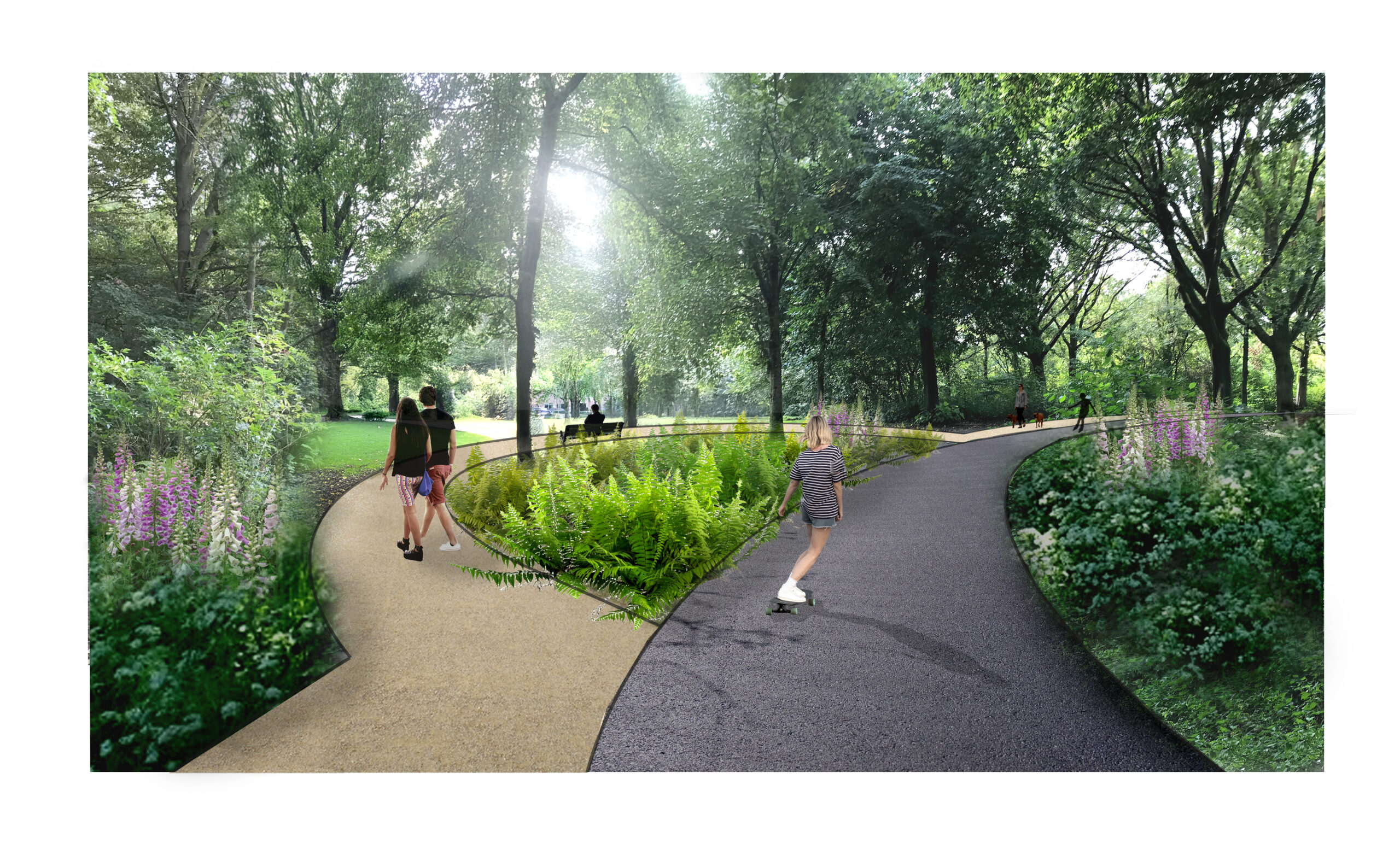
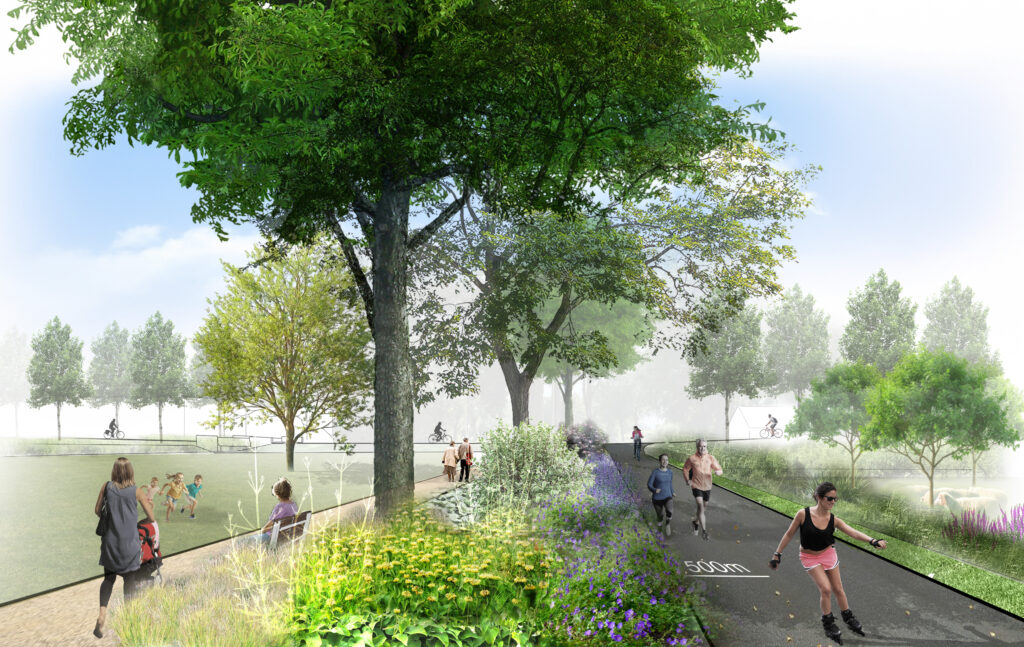
The recreational ribbon creates more cohesion and connection between the northern and southern parts of the park, with a recognizable profile. It integrates the Roald Helm Route, which indicates distances over 1,600 meters using markings on the cycle path. The ribbon consists of a 'slow' walking path and a 'fast' cycling and rollerblading path, which sometimes split and sometimes join. This ensures the preservation of trees, a more playful appearance, and space for flower-rich planting beds. Benches will be placed in these planting beds for comfortable resting spots. The ribbon improves the accessibility of all park facilities, and additional bicycle parking spaces will also be created throughout the park.
Cycling and walking path network
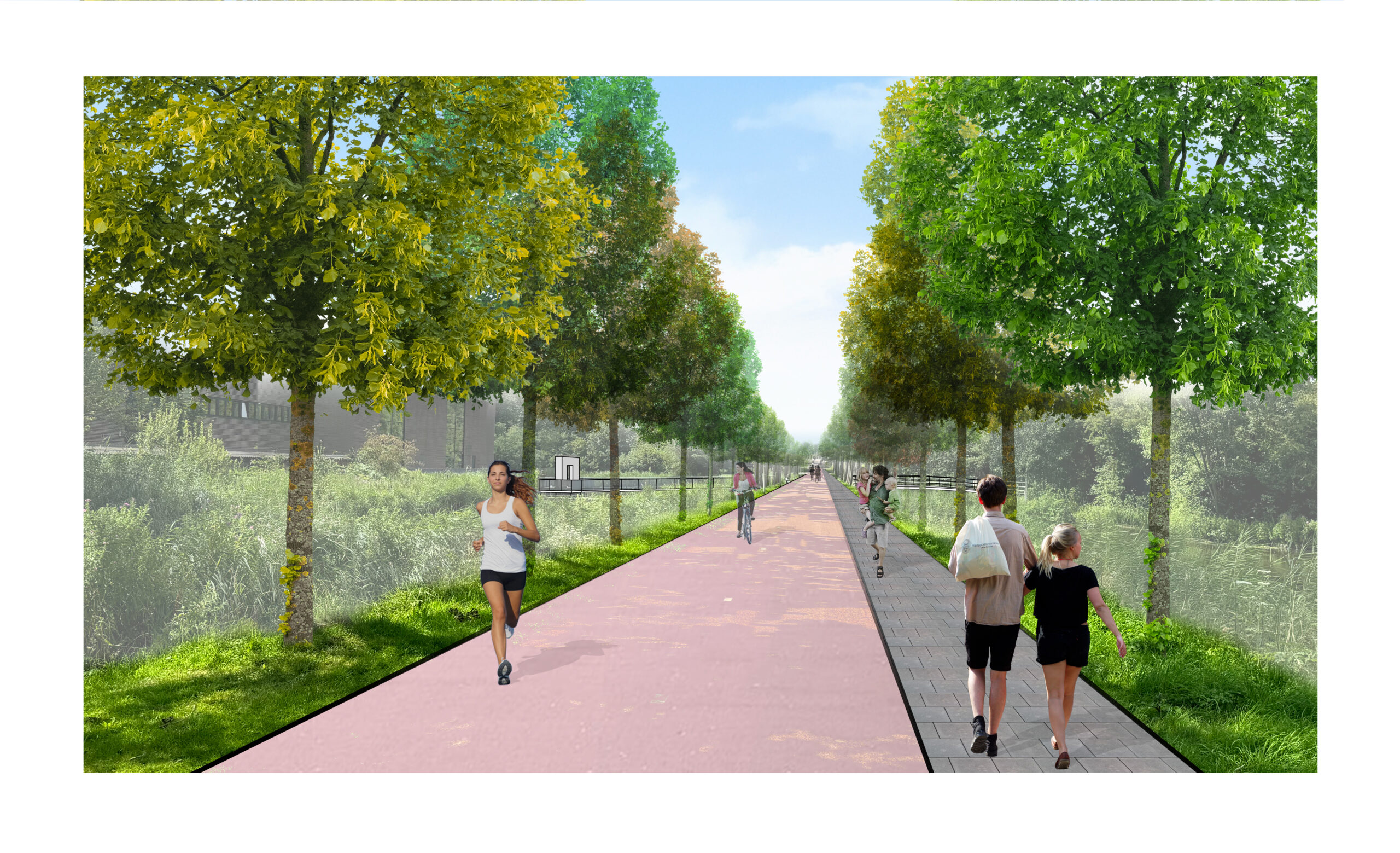
Along the Purmerenderweg, a footpath will be added alongside the cycle path. This will create a pleasant and safe walking route through the park for pedestrians as well. Benches will be placed at various locations along the footpath. The new tree-lined avenue will be planted slightly wider with new, future-proof tree species. In addition to the recreational strip and the Purmerenderweg, the park will gain a network of cycle and walking paths, allowing visitors to move through the park easily and safely. Two dog exercise areas will be created on the north and south sides of the park, providing a pleasant place to take a walk and let your dog run and swim.
Water and banks
Existing banks with revetment are being transformed into nature-friendly banks as much as possible. This increases the water buffering capacity, ensuring the park has a buffering capacity for Purmerend during wet periods.
New recreational facilities
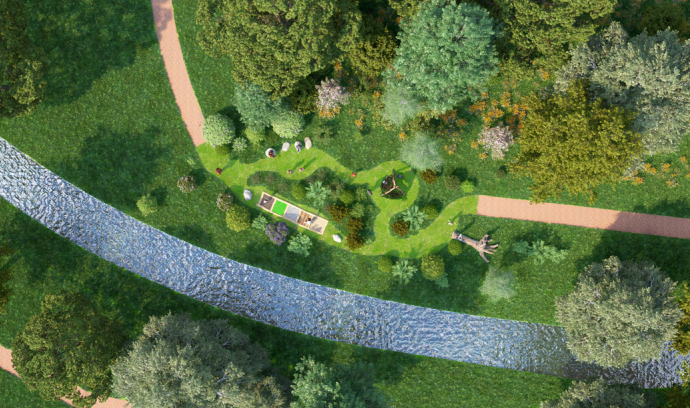
In the context of relaxation, exercise, and social interaction, several new facilities will be added alongside the existing amenities and buildings to further enhance the park's recreational potential. These include a PumpTrack next to the skatepark, two natural play areas, a public playground and outdoor sports equipment, a multi-purpose sports field with teqball and a panna cage, and an area with chess and checkers tables. Entrance pillars with information boards regarding the park's layout will be installed at the four main entrance points.
Event meadow and underground drainage
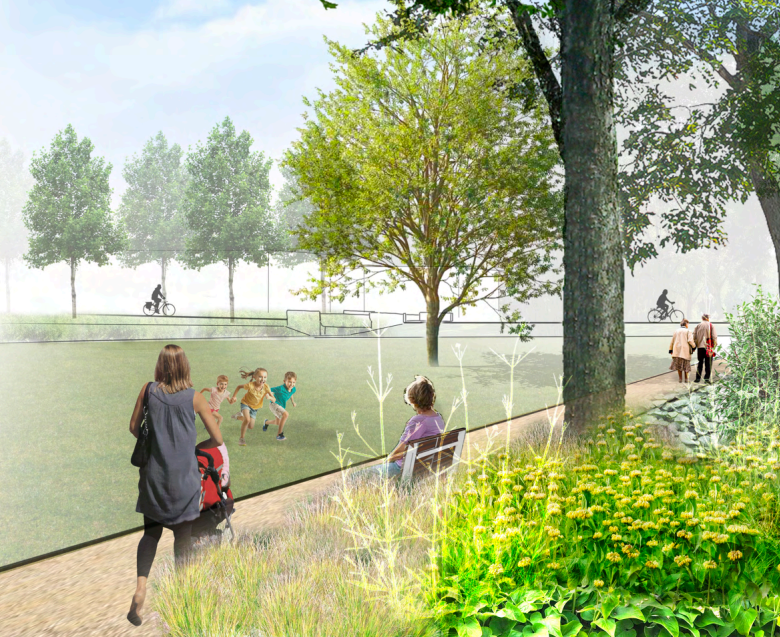
The central field in Leeghwater Park serves as an events meadow, where various events and festivals take place annually. The new design makes the park more resilient to the high user pressure during these events. The walking path surrounding the events meadow is being partially adapted for freight traffic, with a route of grass concrete tiles so that trucks can deliver festival units without causing damage to the grass. Additionally, the ground level is being raised and reinforced with a lava-oxygen layer and an underground drainage system to remove excess water. This strengthens the grass and accelerates recovery after events, while reducing waterlogging. The wettest areas in the events meadow are being raised by approximately half a meter, reducing the height difference between the higher and lower parts of the field.
Biodiversity and planting
Leeghwater Park is rich in trees; however, some of them are in moderate to poor condition. Some trees will be removed due to their quality and condition, while others will be removed for design reasons. Naturally, a large portion of the existing trees will be preserved, and the park will also be supplemented with new trees.
Leeghwater Park contains a large area of thickets. These are valuable for local biodiversity, including various bird species and small mammals such as hedgehogs and mice, as well as amphibians near the water. However, dense thickets form closed 'walls' in the park, creating obscured areas. By thinning and limiting the current thickets, more space and light are created. The beautifully developed solitary shrubs thus gain more space and come into their own better. This creates sightlines through the thickets and provides space for a herbaceous layer with stinzen planting to develop. Stinzen planting consists of naturalized early-flowering plants, usually bulbs or tubers, with striking flowers such as the snowdrop and the wild hyacinth.
Ornamental borders
At points where the recreational strip splits, the space between the cycle path and the walking path is filled with ornamental borders containing the existing or new trees. These borders contribute to the recognizability of the recreational strip throughout the entire park. They consist of flowering species planted in large groups. In addition to the bloom, the leaf color and texture will also contribute to an attractive overall picture. The borders are attractive year-round, offering a strong seasonal experience. Spring bulbs are planted to ensure a year-round attractive and floral appearance.
In the northern part, the grass is rougher and more flower-rich, but still suitable for playing, picnicking, or sunbathing. Here, the low central section is also raised but not reinforced. Raising is carried out where possible with attention to the existing trees. Along the edges between the thickets, space is created for a wet, rough, natural herbaceous layer to develop. This also applies to the two dog exercise areas.
The (art) objects present in the park will be preserved.
In short, the new Leeghwaterpark offers space for relaxation, exercise, and social interaction, and is an important tool for combating heat stress and water issues in the city. A connecting city park and an asset for residents and nature!
Other current affairs
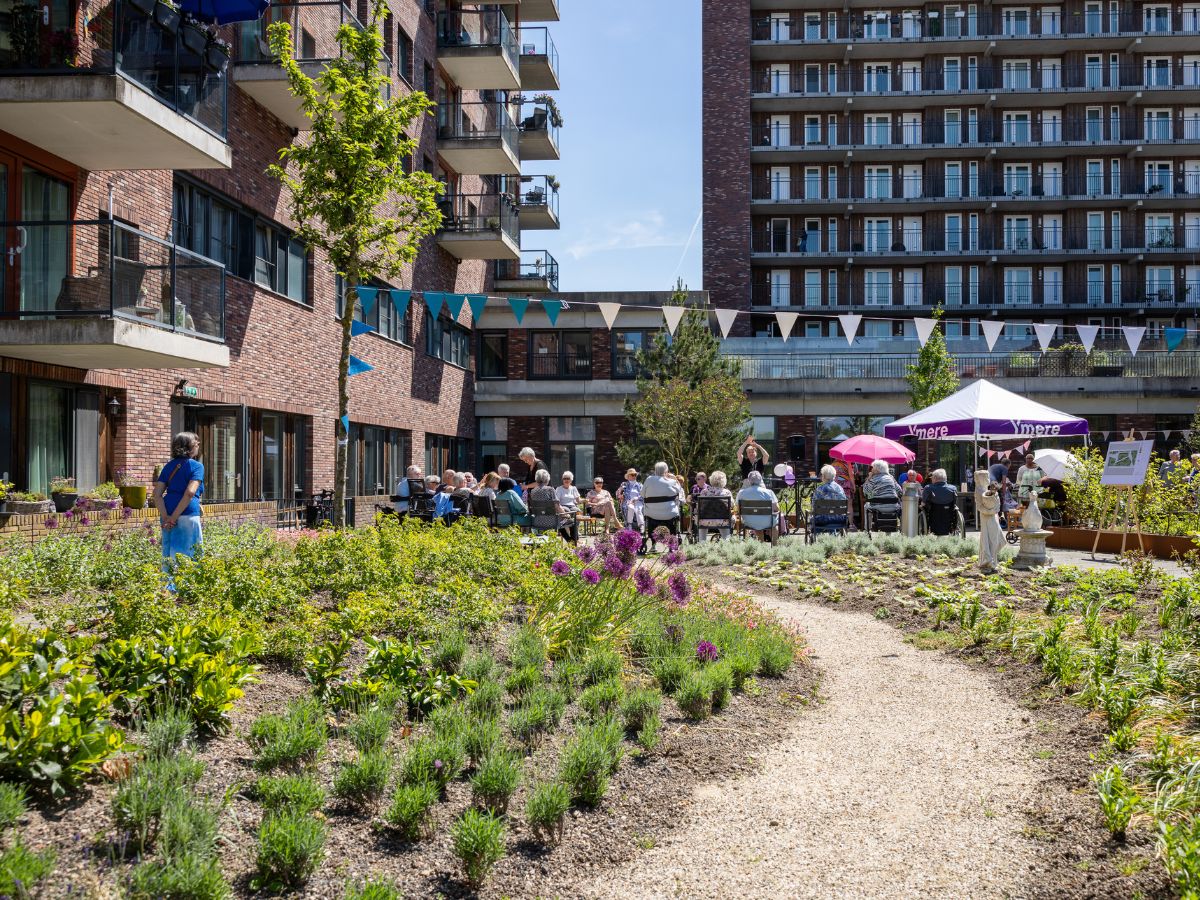

New corporate identity for Buro Mien Ruys! Together we are Prommenz
Prommenz is growing! And that is why we are taking the next step in our development as an organization. Over the past fifteen years, Prommenz has developed into an integrated consultancy and engineering firm. And Buro Mien Ruys has been part of that since 2023!
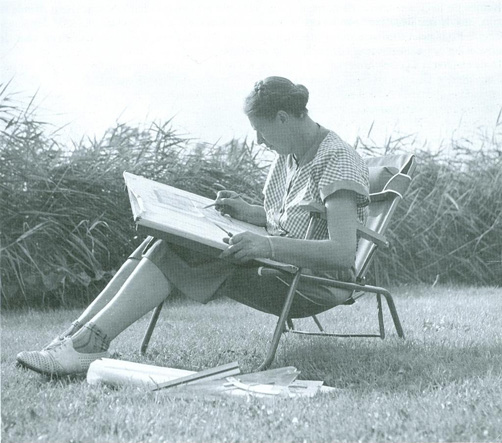
Historic Albert Heijn villa – with a garden by Mien Ruys!
Sometimes designs by Mien Ruys pop up unexpectedly in the news. This time in the North Holland daily newspaper and The Telegraaf. It concerns a special villa on the Provincialeweg in Zaandam, which is currently for sale on Funda.
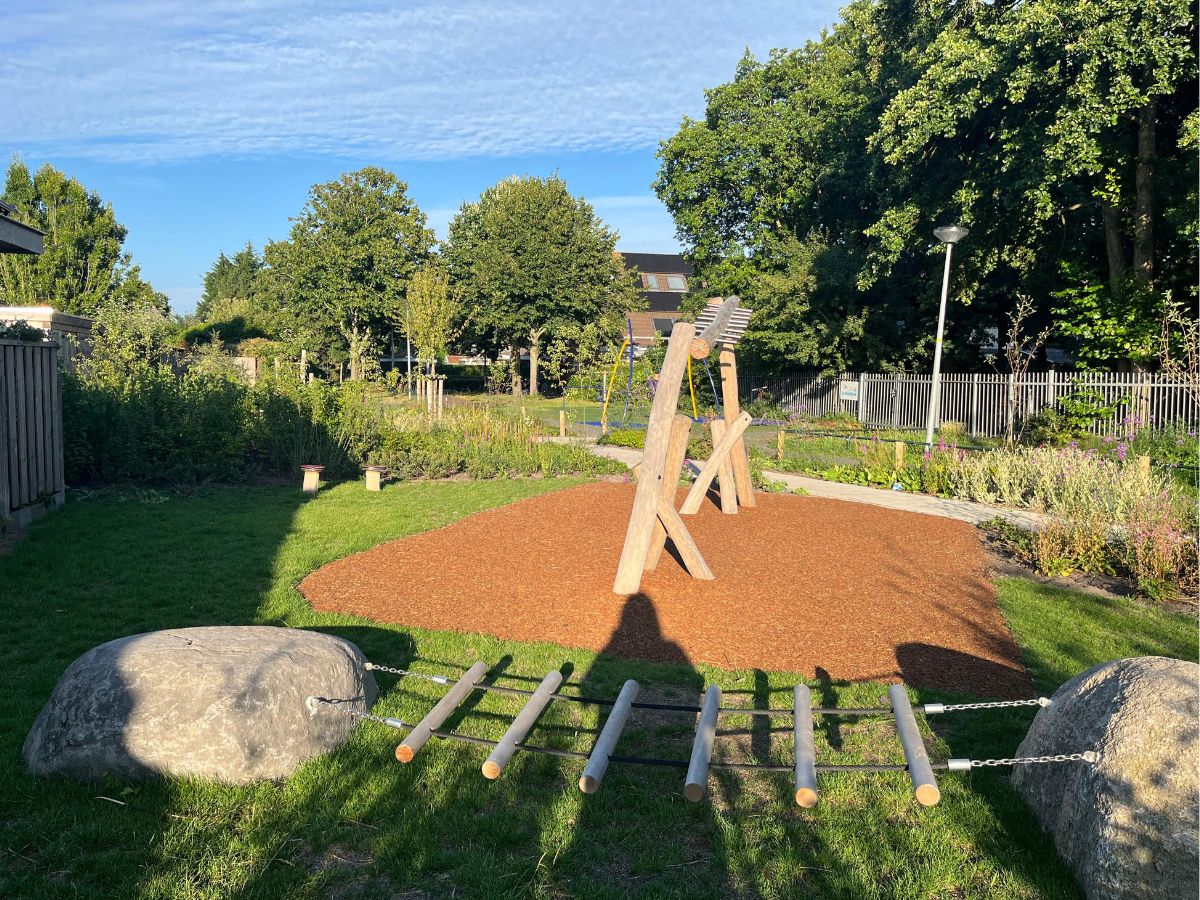
Greening the schoolyard? Bring the play area to life
Many schoolyards are still grey and functionally designed. They consist mainly of tiles and offer little challenge or experience for children. At the same time, problems such as heat stress, flooding, and a lack of physical activity are increasing.