
Healing environment in healthcare
Outdoor spaces at healthcare institutions have a positive and sometimes even healing effect on people. A well-thought-out garden design ensures that residents go outside more often, patients recover faster, and staff experience less stress. In the healthcare sector, such a garden is also referred to as a healing garden (the outdoor space) or a healing environment (both indoors and outdoors). Creating a healing environment requires not only knowledge and experience but also a vision for design.
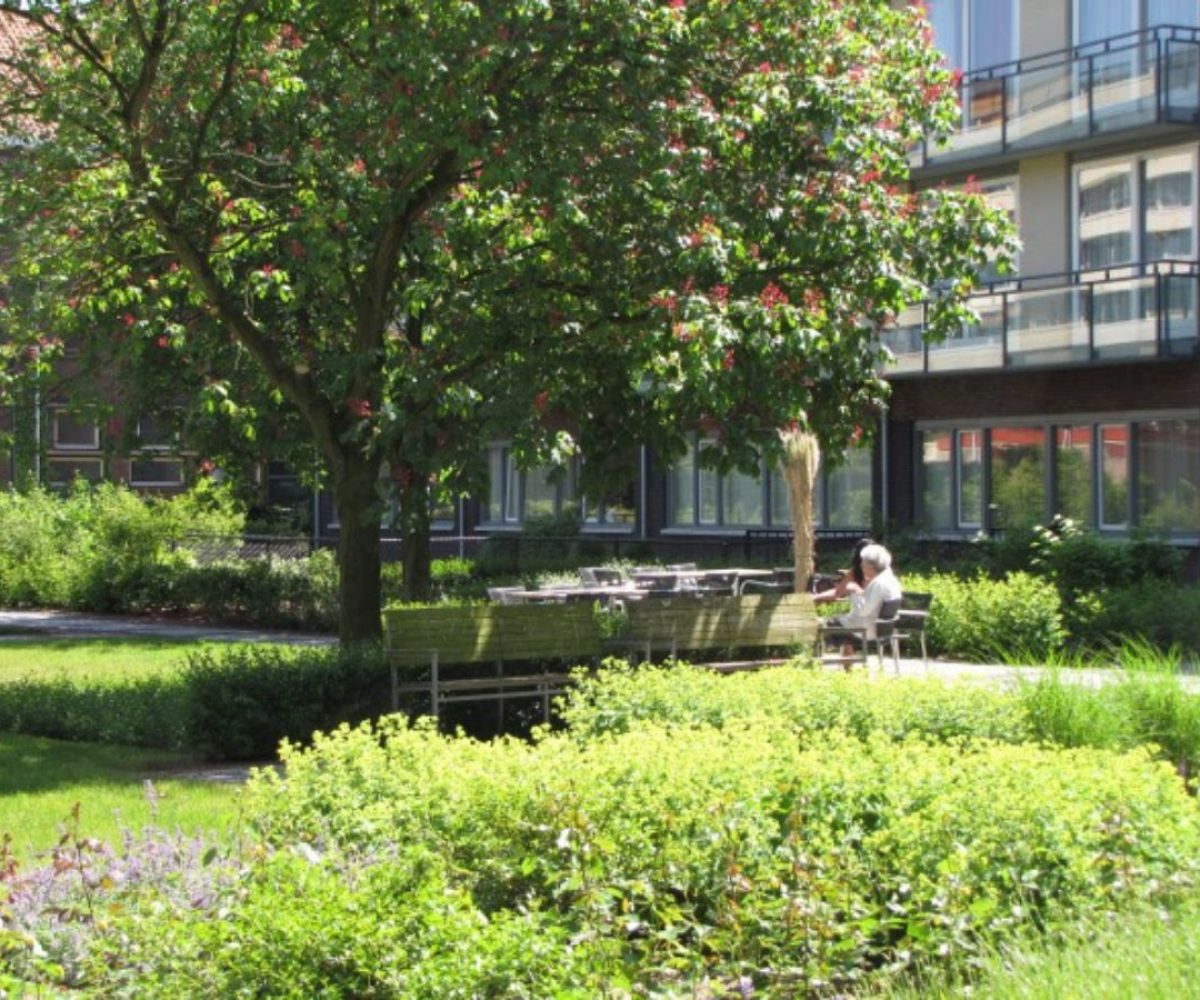
What is a healing environment?
A healing environment is an environment designed to contribute to the well-being of patients, residents, and staff. In healthcare, this means that the physical environment helps to reduce stress and support recovery. Examples include sufficient space for privacy, plenty of daylight, natural elements, light colors, and social interaction with fellow patients. Healing gardens form an essential part of a healing environment. These are outdoor spaces that are smartly designed to have a healing effect.
Factors that play a role in this are, for example:
- Logical and accessible walking routes
- Space for peace and privacy
- Alternation of seating areas in the shade and sunlight
- Overview and stability through good sightlines; this provides peace of mind.
- Seating with good back support for a safe and relaxed feeling
- Use of materials and color
- Types of planting such as fragrant and flowering plants with high ornamental value; this stimulates the senses.
- Promoting social interactions and involvement through, for example, a vegetable garden
The importance of a good outdoor space
A well-designed and thoughtful garden is important, especially at care facilities and institutions. Patients and residents with reduced mobility often spend a lot of time indoors. It is precisely then that the garden serves as a place to step outside for a moment, experience the seasons, get fresh air, and meet other people.
An outdoor space must therefore be inviting to use. People must feel safe there and be able to find their way easily. At the same time, the garden must offer comfort and safety, with sufficient seating and shelter from the sun and wind. If this basic foundation is lacking, the garden remains empty. And with that, an important opportunity to improve the well-being and health of residents is missed.
Benefits for residents and patients
A garden with plenty of greenery and variety is not only pleasant to look at, but also has demonstrable benefits for the health and daily functioning of patients and staff. A well-designed outdoor space ensures:
- Less stress and anxiety
- More exercise and activity
- A better day and night rhythm
- More social interaction
- Faster recovery in patients
- Safety
In addition, an accessible and recognizable environment provides more peace and safety. This is especially important for vulnerable groups, such as the elderly and people with dementia.
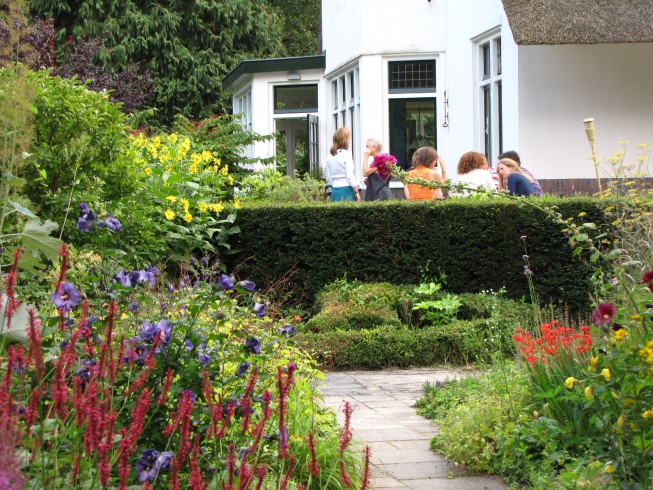
Working method Buro Mien Ruys
- Inventory. Designing a garden for a healthcare institution begins with mapping out the site and the brief. We gather available information, analyze the location, and identify wishes and constraints. Consider usage, orientation, the existing situation, and the relationship of the garden to the building.
- Participation. Buro Mien Ruys likes to actively involve users and residents in the process. Conversations and interactive meetings provide insight into the daily use of the garden, as well as needs and wishes. This results in a design that is supported by the users.
- Vision and sketch design. Based on the above inventory, it is possible to formulate a clear vision. Buro Mien Ruys always takes an integrated approach to a project: use, routing, stay, planting, and management are taken into account from the outset. We then translate this vision into an initial sketch design in which the main layout of the garden becomes visible.
- Preliminary and final design. The sketch design is developed into a preliminary design. In this, choices regarding size, layout, and materials are further elaborated. In the final design, everything is definitively established: dimensions, materials, and the precise layout of the garden.
- Planting plan. Planting provides structure, sightlines, recognition, and a seasonal experience, and is also carefully executed. We select species that suit the site and use, and that are well-maintained.
- Technical elaboration and realization. Finally, we make the plan feasible. Technical details are worked out, such as paving, levels, and connections. With this, a landscaper or contractor can get to work.
Buro Mien Ruys has been at home in creating complete designs for years and is happy to help you achieve a seamless execution.
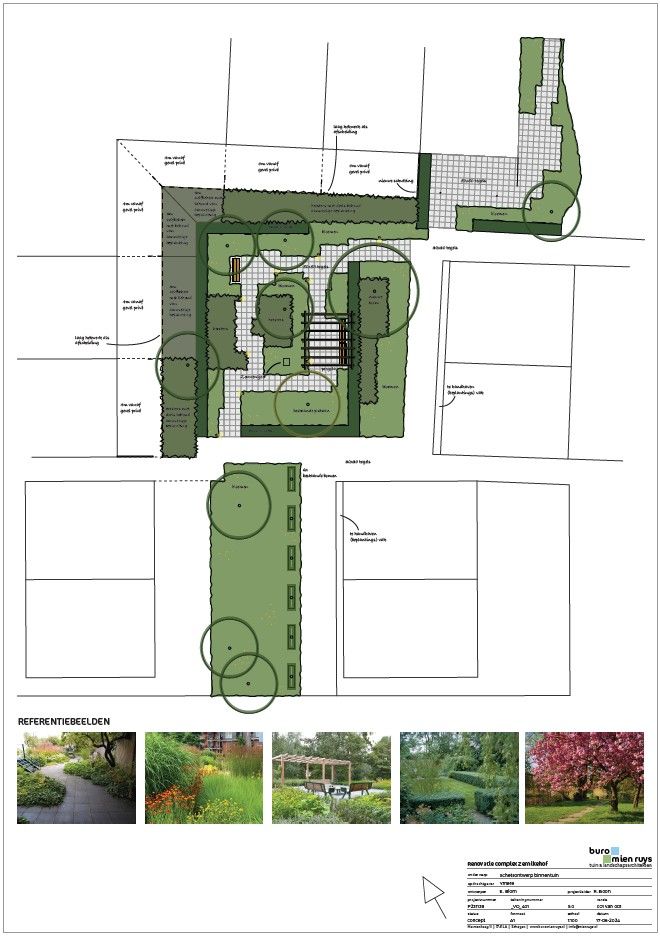
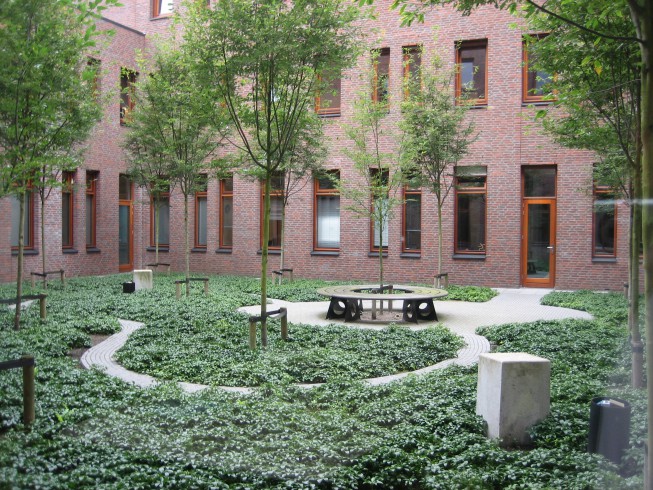
Care garden, sensory garden or exercise garden
What type of garden suits your care institution? There are various types of healing gardens, and the possibilities are endless. In practice, different types of gardens are often combined into a single design. Here are three examples that all contribute to creating a healing environment.
Care garden
A care garden forms the basis, focused on daily use and general well-being. The emphasis is on accessibility, tranquility, and comfort. It is a place where residents can safely go outside and meet each other.
Sensory Garden
A sensory garden focuses on the senses and is filled with scents, colors, and recognizable elements such as herbs or flowers. This type of garden is valuable for people with dementia, for example, because it evokes memories and stimulates the senses.
Exercise garden
An exercise garden stimulates physical activity. Think of simple equipment, walking routes, or elements that encourage movement. This type of garden is often used for rehabilitation or to keep older adults active.
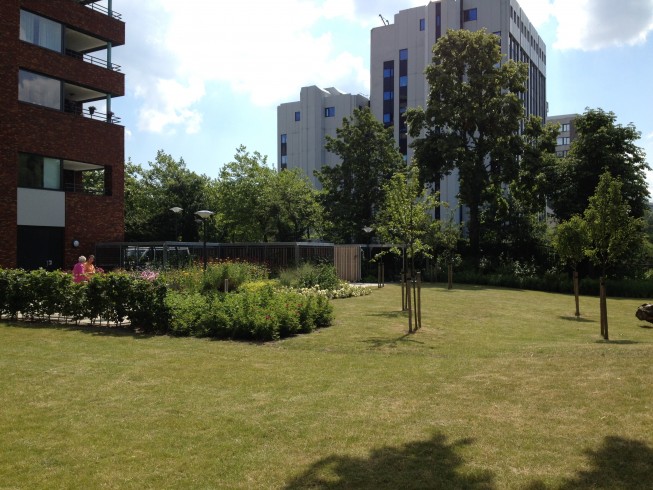
Practical example
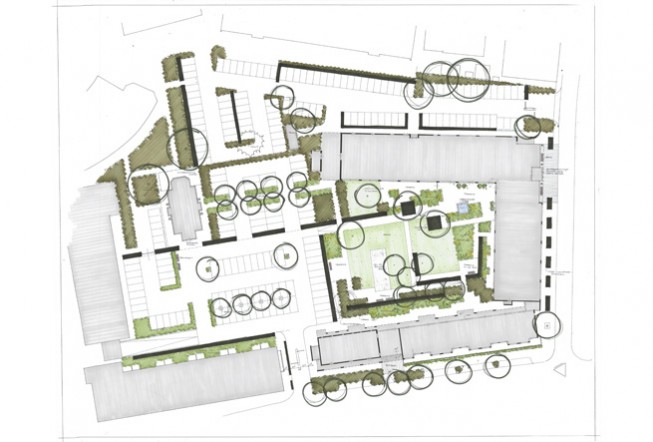
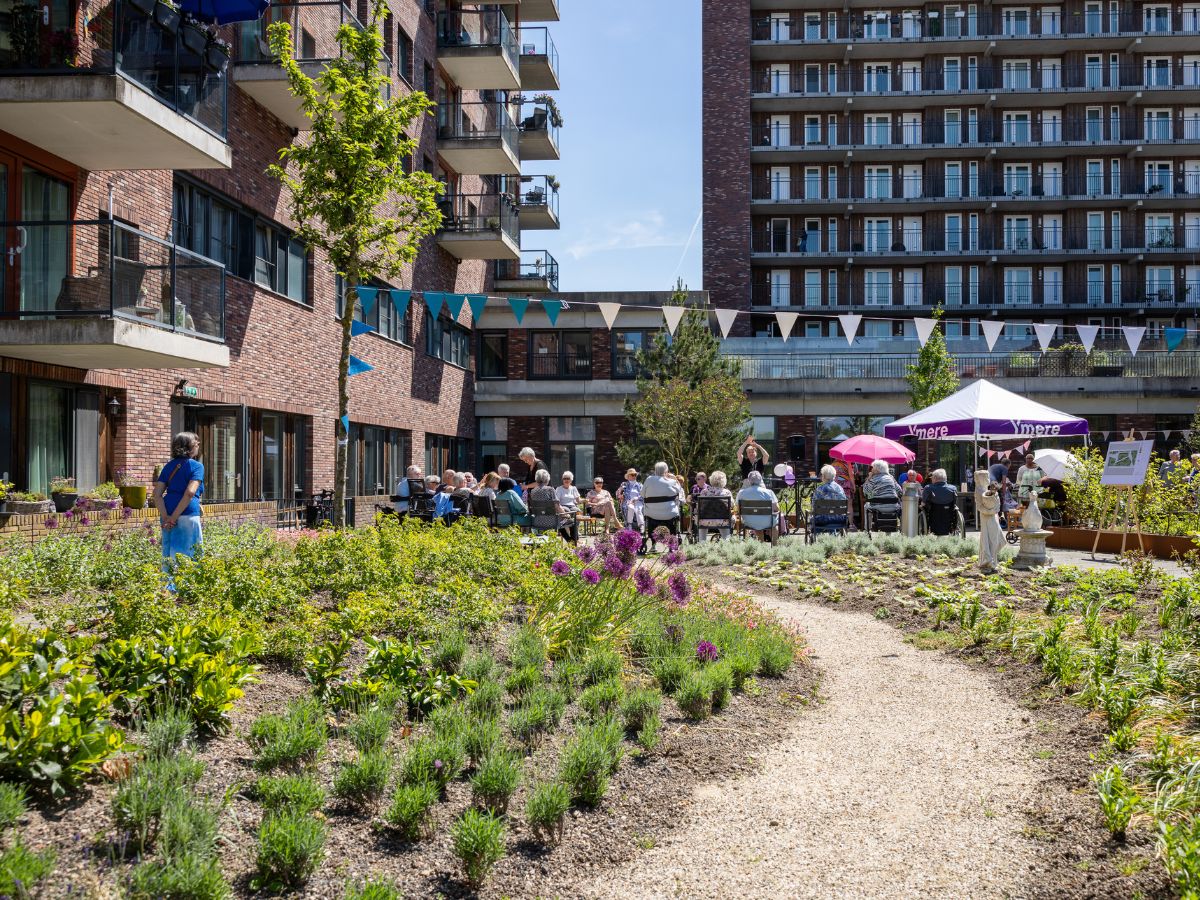
A beautiful example of a well-thought-out outdoor space can be seen in Parc Transwijk in Utrecht. The outdoor space here is designed so that various target groups can make pleasant use of it. What stands out is the clear layout and the combination of tranquility and activity. There are places to sit, walk, and meet each other. The greenery creates a pleasant atmosphere and makes the space attractive to spend time in. Projects like this show that a good outdoor space is not just about how it looks, but above all about how people use and experience the place.
A healing garden for your healthcare institution
A garden that functions well requires a well-thought-out approach that puts the user at the center. A good garden design ensures that the outdoor space is not only beautiful but is also truly utilized. That is precisely what makes the difference for residents, patients, and staff.
Do you have questions or need advice? Feel free to contact us!
Frequently Asked Questions
What is a healing garden in healthcare?
What is a healing environment?
How do you design a care garden?
Why is an outdoor space important in healthcare?
What is a planting plan?
What requirements must a healing garden meet?
What is the difference between a care garden, a sensory garden, and an exercise garden?
Other current affairs
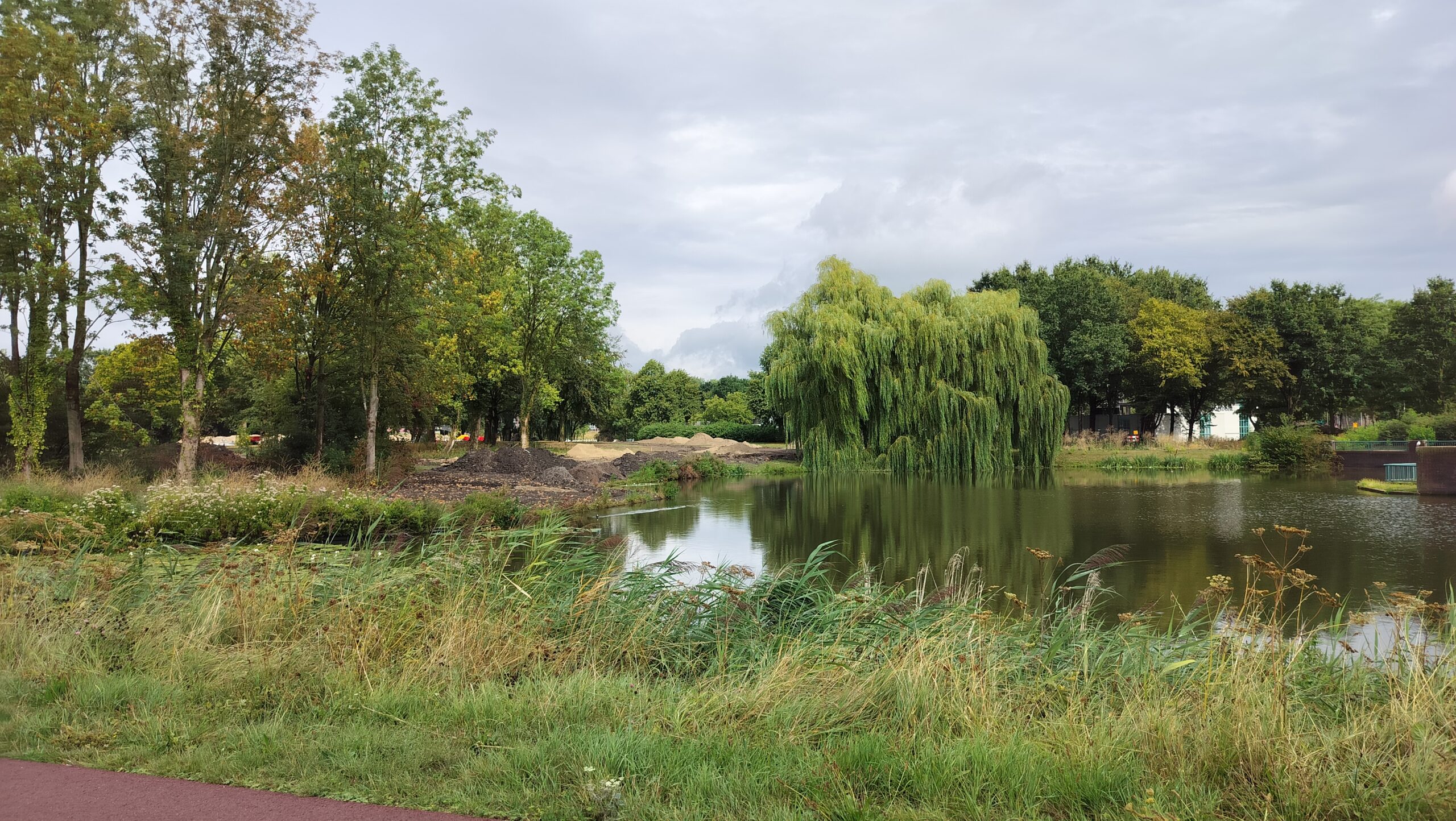
Upgrade of Leeghwaterpark in Purmerend in full swing
The upgrade of Leeghwaterpark in Purmerend is in full swing! Buro Mien Ruys developed the vision and design for the redesign of this 24-hectare city park. The plans are increasingly taking shape, and work is in full swing on the renewed layout of the park.


New corporate identity for Buro Mien Ruys! Together we are Prommenz
Prommenz is growing! And that is why we are taking the next step in our development as an organization. Over the past fifteen years, Prommenz has developed into an integrated consultancy and engineering firm. And Buro Mien Ruys has been part of that since 2023!